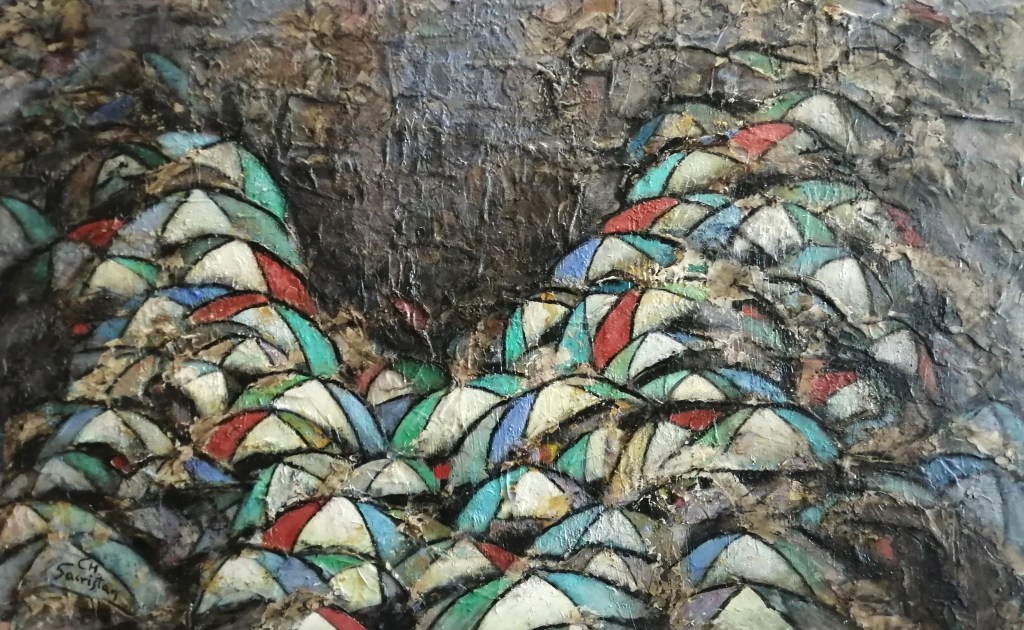
Simbolismo en pintura / Symbolism in painting
El simbolismo es una de las varias rupturas respecto a la estética impresionista que se fueron abriendo paso a finales del siglo XIX y principios del XX, y que estuvo muy ligada al movimiento poético coetáneo de idéntica denominación. En el simbolismo cuenta ante todo la subjetividad y la idea. Importa lo visto de alguna forma por el ojo interior: el ojo que transforma en arquetipo aquello que ofrece el mundo sensible. El simbolismo no se libera, sin embargo, de lo sensible, porque el símbolo está hecho para el ojo, sea este exterior o interior. Símbolo es el signo que no simplemente se usa, sino que está hecho para ser exhibido (o para ser velado). El simbolismo mitifica las apariencias, dejando que las pulsiones humanas encuentren una manera de expresarse, como ya se hizo desde el origen en la pintura rupestre, como hace el niño al pintar, o como hacía el pintor medieval al plasmar la figura de Cristo (imaginándola, porque nunca la había visto de verdad).
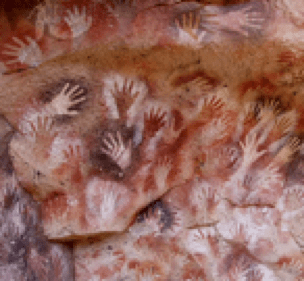
Cueva de Santa Cruz (Argentina). Héctor Avilés
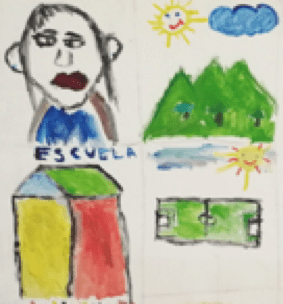


San Clemente de Tahúll
El simbolismo, más que un movimiento pictórico históricamente ubicable, representa, así pues, un componente de toda práctica pictórica, aunque algunas de estas prácticas, tal vez las más ingenuas, lo destacan de manera especial, y otras, más sofisticadas, solo aparentemente tratan de ocultarlo. A mi manera, sigo aquí los pasos de esta pulsión simbólica, como tal vez se ilustra en Amor de Invierno:
Symbolism is one of several breaks with the Impressionist aesthetic that emerged in the late 19th and early 20th centuries and was closely associated with the contemporary poetic movement of the same name. In Symbolism, subjectivity and the idea are paramount. What counts is what is somehow seen by the inner eye: the eye that transforms what the world of perception offers into an archetype. However, symbolism is not free of perception, because the symbol is made for the eye, be it external or internal. The symbol is the sign that is not simply used but is created to be exhibited (or indeed to be veiled). Symbolism mythologizes appearances, allowing human drives to find a way to express themselves, as was done many millennia ago in cave paintings, as the child does when painting, or as the medieval painter did when intending to capture the figure of Christ (imagining this figure because he had never seen it in reality).
Symbolism, more than a historically locatable pictorial movement, is a component of all pictorial practices, even if some of these practices, perhaps the naivest, emphasize it in a special way, and others, more sophisticated, supposedly obscure it. In my own way, I follow this symbolic drive here, as perhaps illustrated in Winter Love:
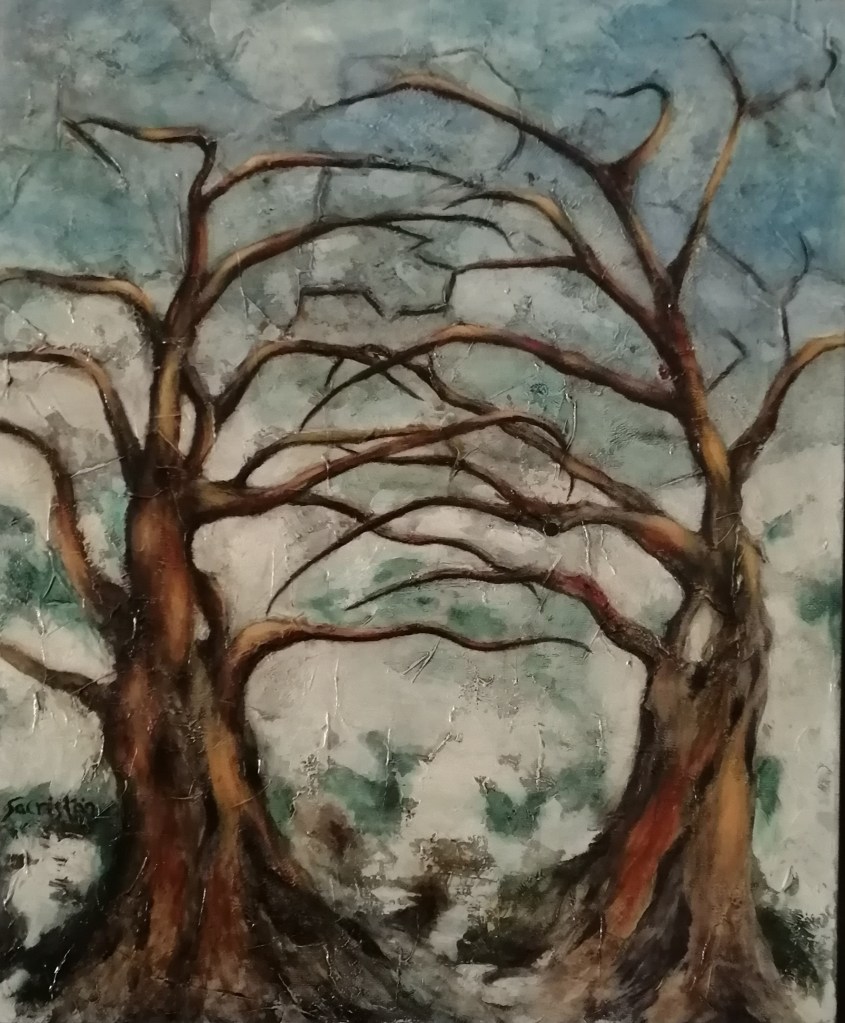
Óleo sobre lienzo (58 x 48 cm) / Oil on canvas (58 x 48 cm) (2003)
Reminiscencias, ensoñaciones y fracturas / Reminiscences, reveries, and fractures
El simbolismo implica siempre una labor introspectiva que transforma sensaciones previas gracias a la actividad reconstructiva de la memoria. Se puede hablar aquí de la reminiscencia como aporte ineludible del quehacer pictórico. Esta manera de formular las cosas se hace eco de la vieja teoría platónica del conocimiento. Cabe asumir en efecto para la memoria las características propias de un filtro idealizador de nuestra experiencia. La memoria transforma en arquetipo todo lo vivido. La condición idealizadora de la memoria, que conjuga lo bello y lo bueno, no está, sin embargo, dada en sí misma, sino que requiere de un tipo de posicionamiento ético o un tipo de impulso vital que la alimente. Se podría hablar de un tipo de generosidad para olvidar la experiencia negativa, lo que siendo actitud común de lo humano dista de ser regla universal. Hay quien perdona, pero –siendo inconsecuente- no olvida.
Symbolism always involves an introspective task that transforms previous sensations thanks to the reconstructive activity of memory. Here I speak of reminiscence as an inescapable contribution of the pictorial task. This way of formulating things echoes the old Platonic theory of knowledge. Indeed, memory can be seen as an idealizing filter of our experience. Memory transforms everything experienced into an archetype. However, the idealizing nature of memory, which unites the beautiful and the good, is not simply granted or given but requires a kind of ethical positioning or a kind of life impulse to nurture it. One could speak of the generosity to forget the negative experience, which is a common human attitude, but far from being a universal rule. There are those who forgive but, being inconsistent, do not forget.
En Prensa amarilla se idealiza el recuerdo de lo bello y lo bueno: lectura complaciente acompañada por la luz de una ventana. Aun así, también la experiencia negativa admite idealización, y lo feo y lo malo encuentran su lugar en el universo simbólico, como, sin pretenderlo, parece suceder en Epopeya incierta.
Yellow Press idealizes the memory of the beautiful and the good: a complacent reading accompanied by the light of a window. However, the negative experience also allows for idealization, and the ugly and the bad find their place in the symbolic universe, as seems to happen, unintentionally, in an Uncertain Epic.

Óleo sobre tabla (63 x 48 cm) / Oil on panel (63 x 48 cm) (2009)

Óleo sobre tabla (31 x 22 cm) / Oil on panel (31 x 22 cm) (2020)
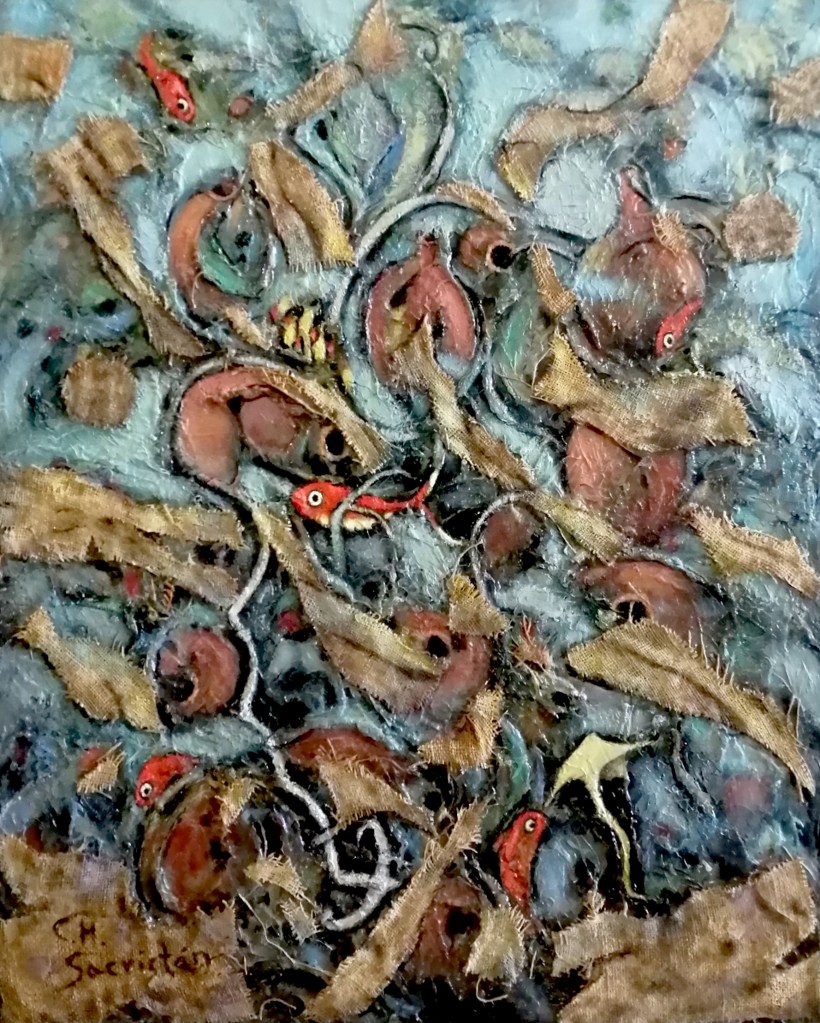
El alcance de lo que recordamos se proyecta en realidad hacia el infinito, y trasciende el ámbito de las experiencias individuales. En nuestros genes han quedado decantados e impresos los esquemas con los que nuestra especie fue modelando su experiencia de las cosas. Los criterios básicos de la percepción, del equilibrio o el desequilibrio, del dinamismo en la imagen, de las condiciones de contraste, de lo claro y lo oscuro, de la horizontalidad y la verticalidad, etc. están alojadas en esa inmensa memoria, inconsciente, que compartimos como seres humanos y, más aún, como seres vivos. De esta manera, vivir será siempre recordar viejos encuentros o viejas batallas. Y si esto no fuera acaso suficiente, ahí tenemos también esa lengua que hablamos, que nos enseña a ver las cosas de determinada manera, y nos obliga a recordar eso que ya vieron (o quisieron ver así) las innumerables generaciones de hablantes que nos preceden.
Paradoja insondable,
la de aquellos que viven todavía…
¡Siempre TAN POCOS…!
Si se compara
con los que ya murieron,
y poblaron de sombras la memoria de los vivos.
Aún vive, en lo profundo,
el pez embelesado
que en otro tiempo fuimos.
The range of what we remember is projected into infinity and transcends the scope of individual experience. The schemes by which our species has modelled its experience of things have been decanted and imprinted in our genes. The basic criteria of perception, of balance or imbalance, of movement in the image, of the conditions of contrast, of light and dark, of horizontality and verticality, etc., are stored in that immense unconscious memory that we share as human beings, and even more so as living beings. In this sense, living will always mean remembering old encounters or old battles. And as if that were not enough, there is also this language that we speak, or that speaks for us, that teaches us to see things in a certain way and forces us to take stock of what countless generations of speakers who preceded us have already seen (or indeed wanted to see).
An unfathomable paradox,
is that of those who are still alive…
Always SO FEW…!
when compared
to those who have already perished
and populated the memory of the living with shadows.
The enraptured fish we once were
still lives in the deep.
Gesso, óleo y arpillera sobre lienzo / Gesso, oil and sackcloth on canvas
81 x 65 cm.
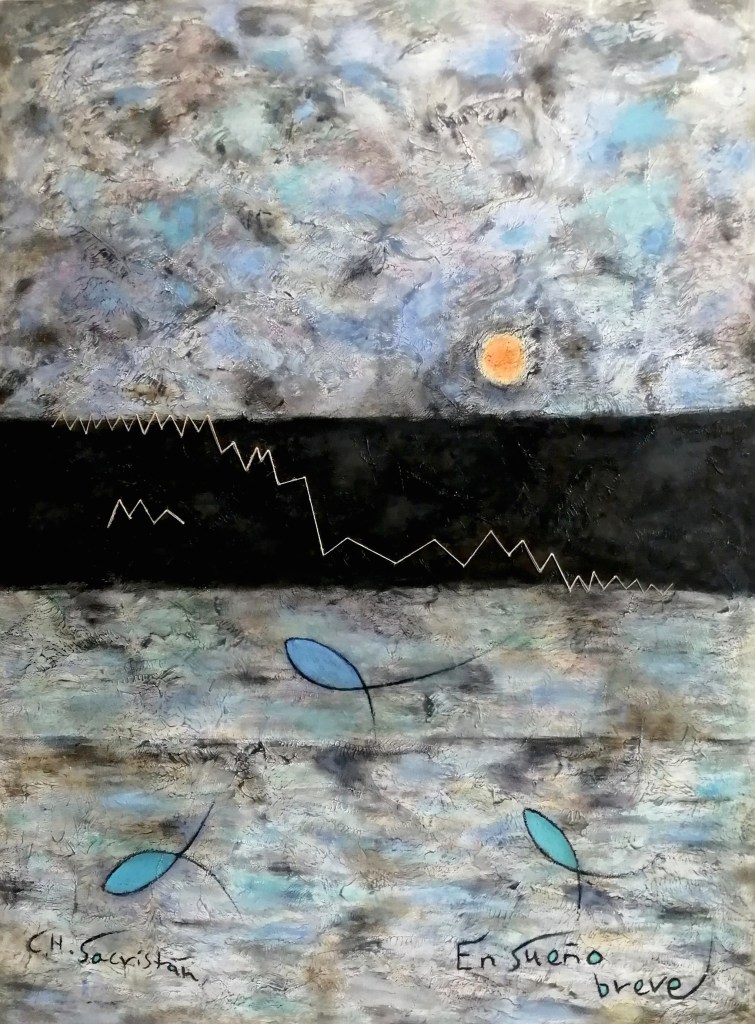
Las transformaciones sobre lo sensible pueden adquirir dimensiones oníricas, pero sin dejar del todo que los sueños suplanten lo real o desconecten de lo real, como nos propone el surrealismo. La composición En Sueño Breve contiene este tipo de transformación, más propia del estado transicional de duermevela creativa, que de un sueño profundo. El momento del anochecer, que refleja esta composición, o el del amanecer de No me despiertes del todo, son siempre propicios para figuración simbólica.
The transformations of the perceptual world can take on dreamlike dimensions, but without the dream completely replacing the real or becoming detached from the real, as surrealism proposes. The composition Fleeting Slumber contains this kind of transformation, more typical of the transitional state of creative drowsiness than of a deep sleep. The moment of sunset, which is reflected in this composition, or the sunrise of Don’t wake me up…completely, are always conducive to symbolic figuration.
Óleo sobre lienzo (140 x 104 cm) (a partir de composición fotográfica original de Giulia Colaizzi) / Oil on canvas (140 x 104 cm) (from original photographic composition by Giulia Colaizzi)
(2022)

Óleo sobre lienzo (60 x 45 cm) / Oil on canvas (60 x 45 cm)
(2022)
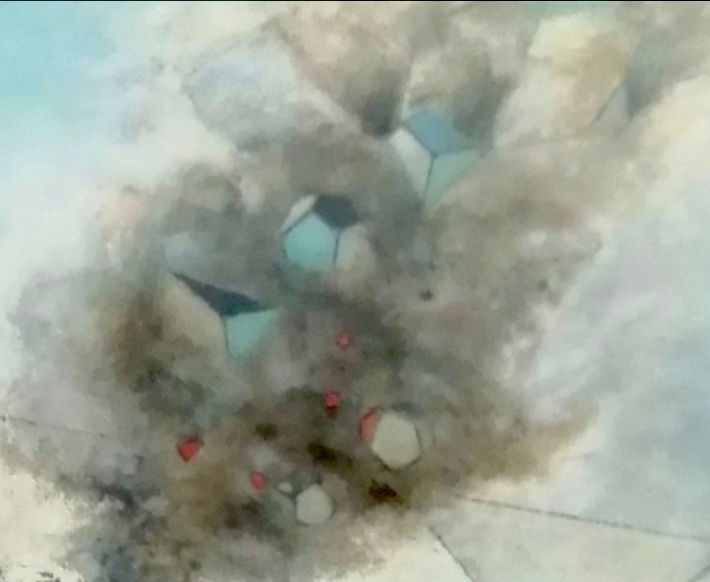
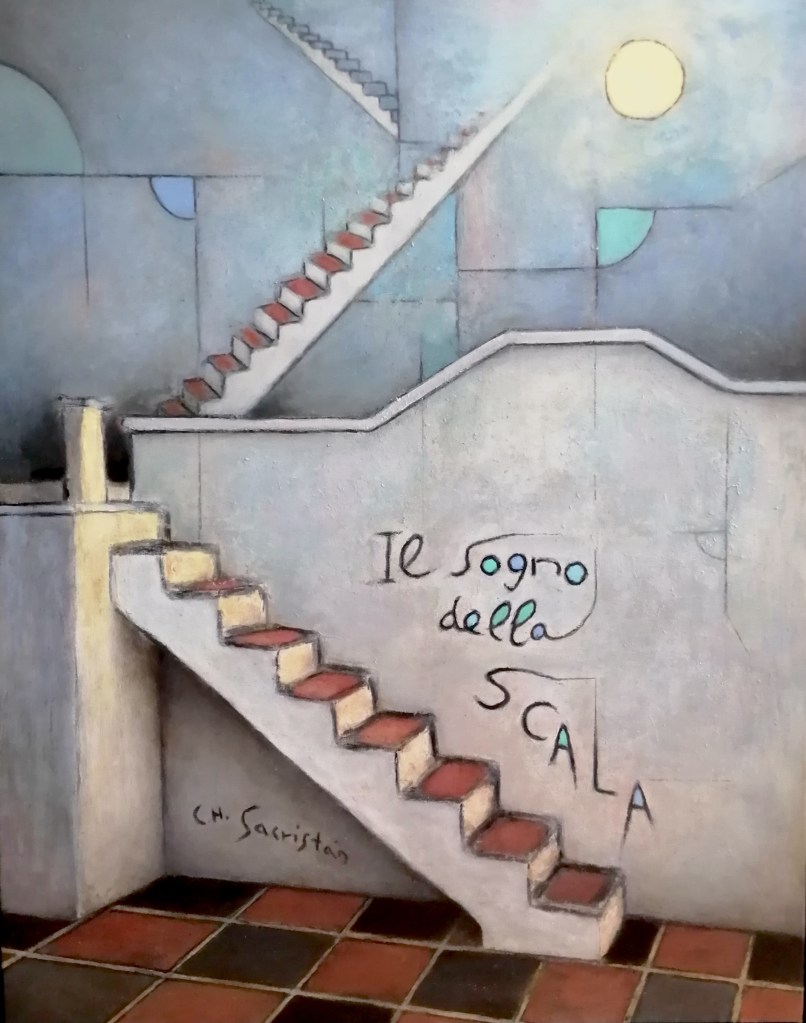
La transformación simbólica del objeto puede suponer, a veces, que lo hagamos soñar junto a nosotros. Se presenta aquí una toma fotográfica sobre el puerto de Gdansk (Polonia) y su versión simbólica bajo el título En sueño poliédrico. En el detalle de la composición se destaca cómo el humo de las chimeneas se reinterpreta como el sueño de las casas. Si ellas, en definitiva, son poliedros, los poliedros, por necesidad, deberán estar presentes en sus sueños (y en los nuestros). Otra versión del sueño de las cosas se ofrece en Il sogno della scala.
The symbolic transformation of the object can sometimes mean that we make it dream along with us. Here we have a photographic shot of the port of Gdansk (Poland) and its symbolic version under the title Polyhedral dream. The detail of the composition shows how the smoke from the chimneys is reinterpreted as the dream of the houses. If they are ultimately polyhedrons, polyhedrons must necessarily be present in their dreams (and indeed in ours). Another version of the dream of things is offered in Il sogno della scala.


Óleo sobre lienzo (100×100 cm) / Oil on canvas (100×100 cm)
(2023)
Óleo sobre lienzo (92×73 cm) / Oil on canvas (92×73 cm)
(2023)
El hiperrealismo de la figura, otra manera de idealizarla, se puede hacer compatible con un entorno simbólico, lo que trata de plasmarse en Ichthys Ioannis o en Asiento endeble del mundo y Jorge llevando el rumbo.
The hyperrealism of the figure, yet another way of idealizing it, can be made compatible with a symbolic environment. Ichthys Ionnanis or Flimsy seat of the world, and Jorge leading the way tries to capture this.
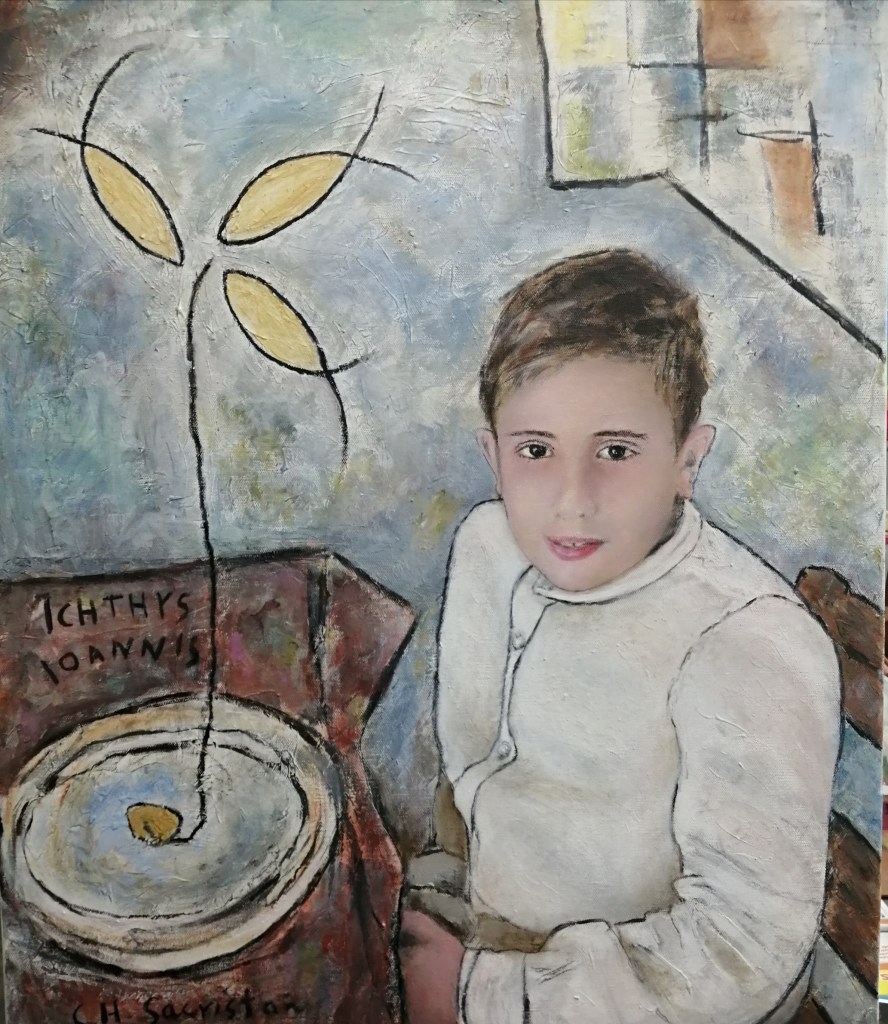
Óleo sobre lienzo (81 x 65 cm) / Oil on canvas (81 x 65 cm)
(2022)
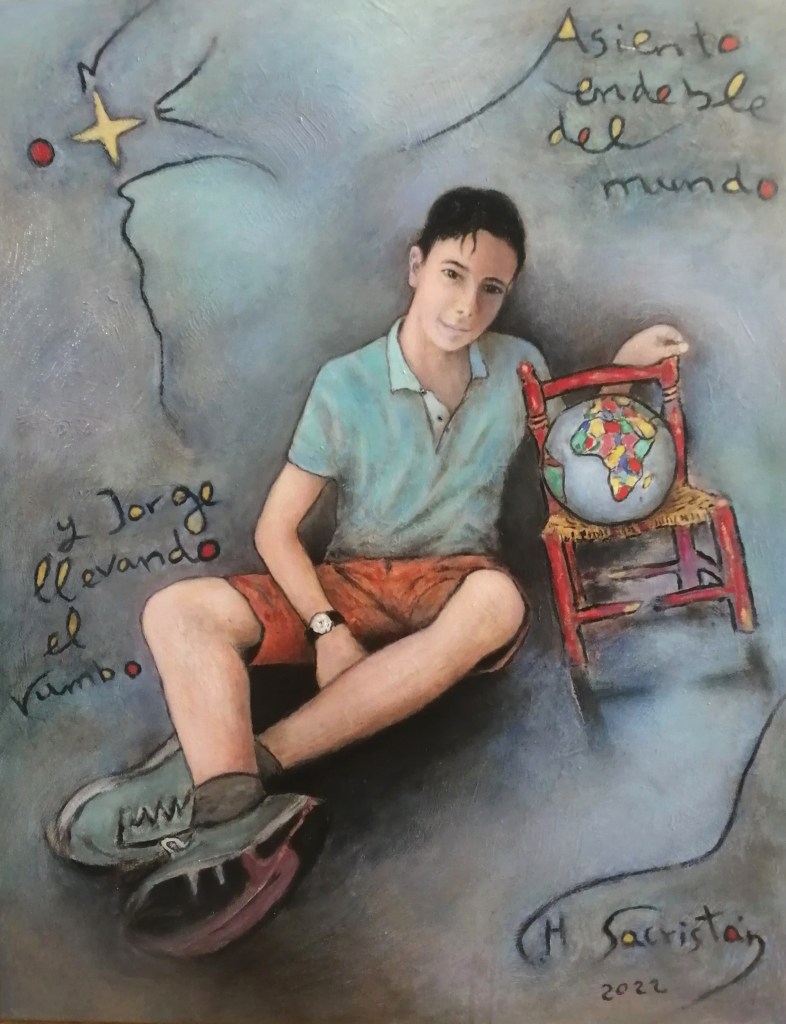
Flimsy seat of world, and Jorge leading the way
Óleo sobre lienzo (92 x 73 cm) / Oil on canvas (92 x 73 cm)
(2022)
Aunque no exclusivamente, la técnica compositiva ofrece fragmentos e iteraciones con los que se reconstruye el objeto ideal perdido en los avatares del mundo. La actividad pictórica no trata ya de reproducir ese objeto ideal, sino que la transforma, en mayor o menor medida, con un amplio margen de sorpresa para el propio pintor. Solo en este sentido la pintura puede entenderse como una práctica de descubrimiento o desvelamiento. Este es el proceder seguido en Alma de cántaro.
Although not exclusively, the compositional technique offers fragments and iterations with which the ideal object, lost in the avatars of the world, is reconstructed. Pictorial activity no longer seeks to reproduce this ideal object, but rather transforms it, to a greater or lesser extent, with lots of room for surprise for the painter himself. Only in this sense can painting be understood as a practice of discovery or revelation. This is the procedure followed in Pitcher’s Soul, to which I have dedicated a short poem.
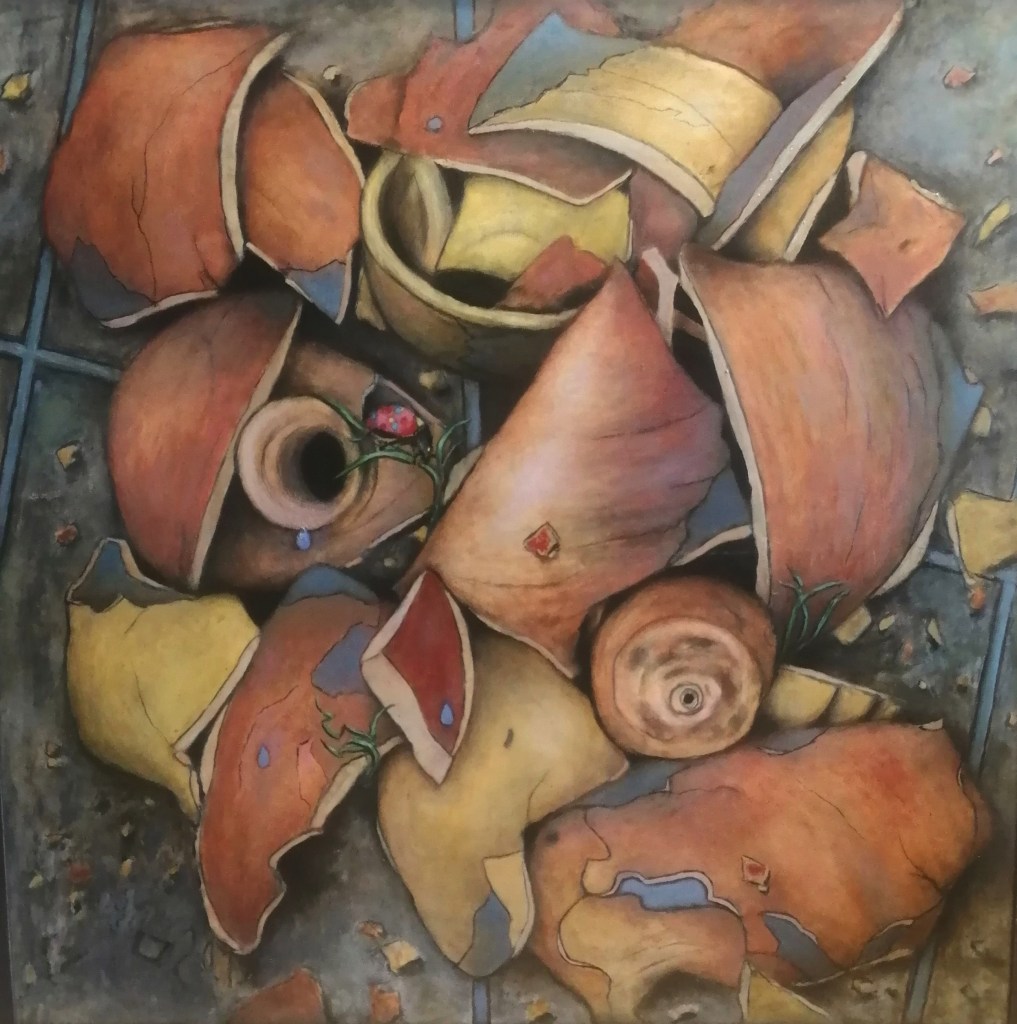
Óleo sobre lienzo (105 x 105 cm) / Oil on canvas (105 x 105 cm)
(2021)
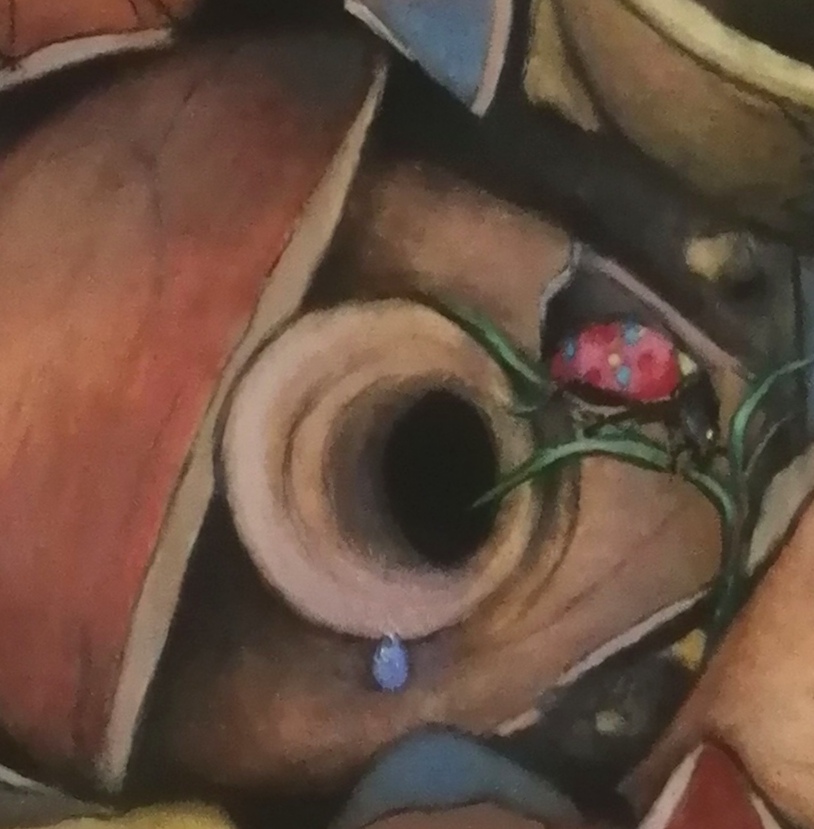

LÁGRIMA DE CÁNTARO
Alma de cántaro,
cántaro roto.
Sueñas con labios que no están aquí.
Se agrietaron contigo, se perdieron…
Son recuerdos quebrados,
en la frágil memoria…
del barro.
Cántaro roto.
¡Pena de cántaro!
LÁGRIMA DE CÁNTARO (A poetic-pictorial dialogue)
Naïve soul of the pitcher,
Oh! shattered pitcher.
You dream of lips already gone.
They have cracked as you have,
they’re lost forever…
Fragments are broken yearnings,
in the fragile memory…
of potter’s clay.
Oh! shattered pitcher.
Pity the pitcher! Pitcher’s pain!
(Translated by John Joseph Vélez
Inicio
LÁGRIMA DE CÁNTARO (Re-verso,
en diálogo pictórico poético)
Alma de cántaro,
cántaro roto.
Sueñas con labios que no están aquí.
Se agrietaron contigo, se perdieron…
Son recuerdos quebrados,
en la frágil memoria…
del barro.
Alma de cántaro,
cántaro roto.
Piensas en labios
que se marcharon ya.
Son durmientes anhelos
en la afanosa mano…
del Alfarero.
Cántaro roto.
¡Pena de cántaro!
Se agrietaron las tierras,
que invadieron los mares.
Se quebraron los mares…
Oh! añorada Pangea.
Cántaro roto.
Cántaro en pena.
Carlos H. Sacristán
(Con motivo de la presentación
de En Sueño Breve.
Una Mitología del Sentimiento.
Valencia: NPQ Editores)
La paradoja y los equilibrios inestables pueden ser efectos de una tensión simbólica.
The paradox and the unstable balances can be explained by the effects of a symbolic tension.
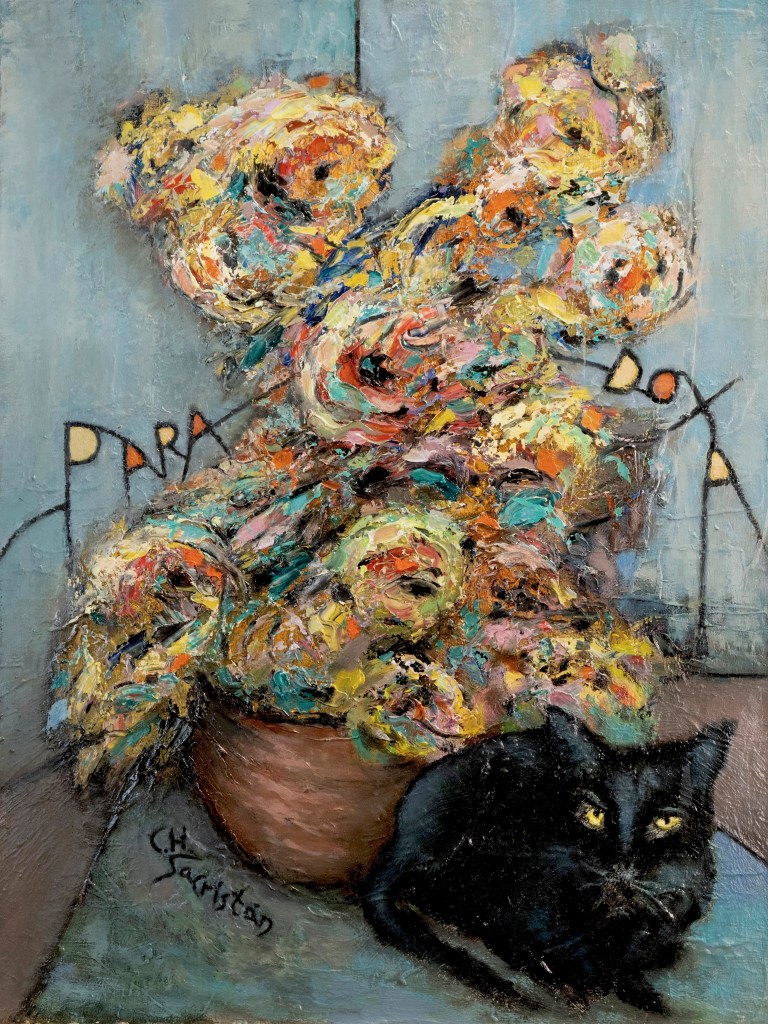
Óleo sobre lienzo (61×46 cm) / Oil on canvas (61×46 cm)
(2021)
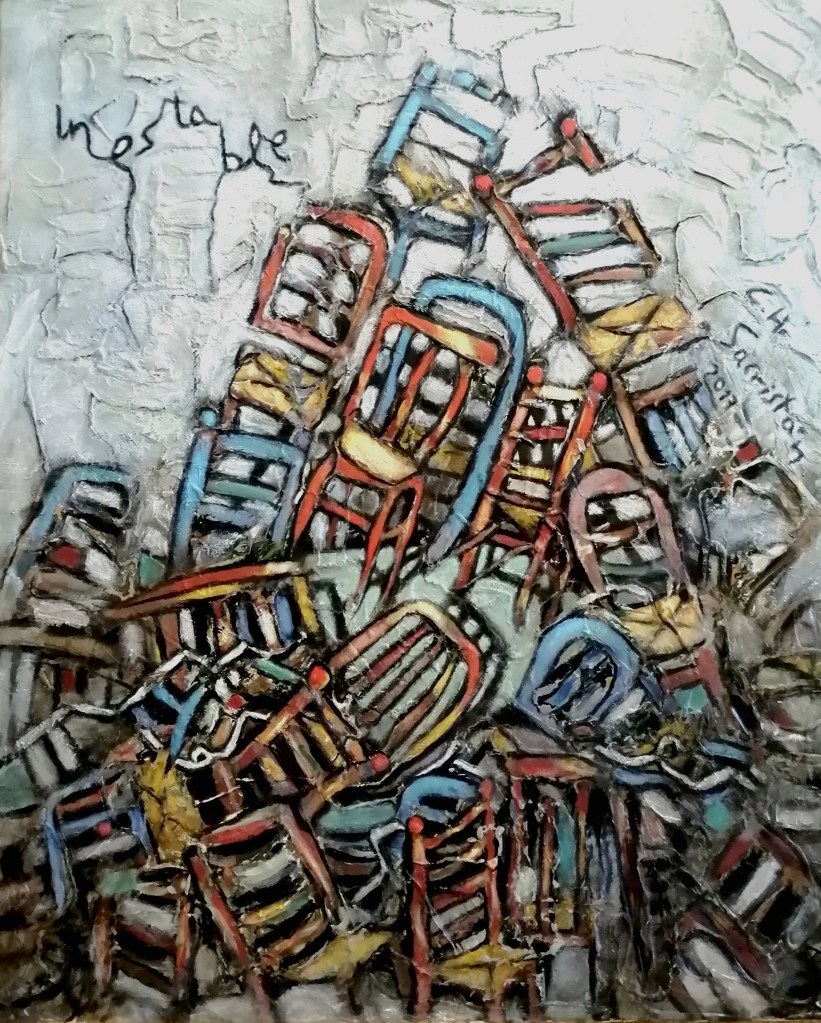
Óleo sobre lienzo (73 x 60 cm) / Oil on canvas (73 x 60 cm)
(2018)
Huellas de lo humano sin la presencia del ser humano. Los espacios sugieren un escenario humano del que el sujeto humano se encuentra ausente, como en la composición Lector ausente, u objetos que adquieren rasgos de lo humano de manera más o menos explícita, como en el Bosque imaginario.
Human footprints without human presence. The spaces suggest a human environment in which the human subject is absent, as in the Absent Reader composition, or objects that explicitly acquire human characteristics, as in the Imaginary Forest.
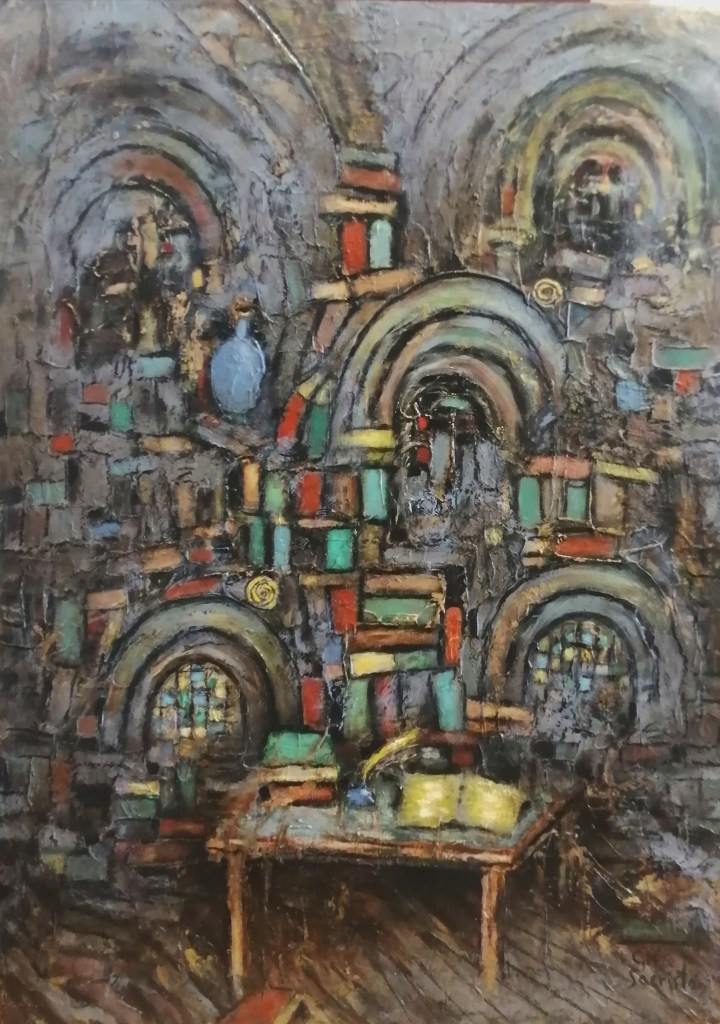
Óleo sobre tabla / Oil on panel (101 x 72 cm)
(2018)
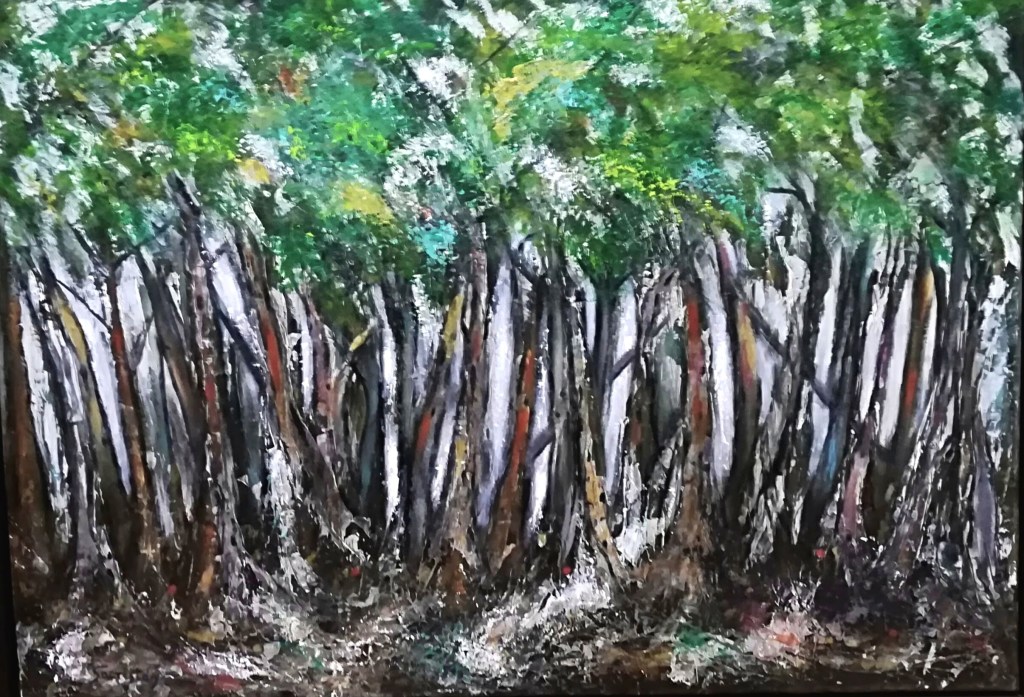
Óleo sobre lienzo (165 x 102 cm) / Oil on canvas (165 x 102 cm)
(2023
Apertura interpretativa / Interpretive openness
El simbolismo tiene su punto culminante en la denominación de la obra, que debe entenderse como elemento integrado en el producto final. La denominación es un componente verbal asociado a la imagen. Contiene un una propuesta interpretativa y, de alguna forma, poética. No debe clausurar la imaginación del receptor, ni describir, ni explicar, sino sugerir un espacio tan abierto como la propia composición. Este proceder puede ilustrarse con la denominación A piece of time de una marina nocturna (denominación sugerida por Saida Anssari, como también lo fue para el caso anterior de Reminiscencia). Otros nombres, y proyectos interpretativos, pueden ser libremente sugeridos. La traducción del nombre del cuadro contiene siempre un sesgo o clinamen interpretativo.
Symbolism culminates in the naming of the work, which must be understood as an integral part of the final product. The name is a verbal component associated with the image. It contains an interpretative and, in a way, poetic proposal. It should not close the imagination of the recipient, nor describe nor explain, but rather suggest a space as open as the composition itself. This procedure can be illustrated with the name A piece of time for a nocturnal marina (a name proposed by Saida Anssari, as in the previous case of Reminiscence). Other names and interpretations can be proposed freely. The translation of the name of the painting always contains an interpretive bias or clinamen.

Óleo sobre lienzo (81 x 60 cm) / Oil on canvas (81 x 60) (2016 cm)
La composición interpretativamente abierta de la obra puede ser también ilustrada en Enlaces débiles. Se muestra aquí una composición fotográfica de Lourdes Olmos. Se trata de una estructura colgante de llaves, que puede girar sobre sí misma, y que se ilumina de forma que proyecta diferentes sombras sobre una superficie. Puede desmontarse para luego montarse libremente, pero tratando de buscar ángulos sugerentes (en torno a los 140 grados). Si se hace girar, ofrece diferentes perspectivas y proyecciones. Se trata de un símbolo de la molécula orgánica y de los enlaces químicos débiles: esos que hacen posible la vida.
The open-ended nature of the work can also be seen in Weak Links. A photographic composition by Lourdes Olmos is shown here. It is a hanging structure of keys that can rotate around itself and is lit in such a way that it casts different shadows on a surface. It can be taken apart and reassembled freely, trying to find suggestive angles (approaching 140 degrees). When rotated, it offers different perspectives and projections. It is a symbol of the organic molecule and the weak chemical bonds that make life possible.

Enlaces débiles / Weak links
Estructura de llaves (composición fotográfica de Lourdes Olmos) / Structure of keys (photographic composition by Lourdes Olmos) (2017)
Agradecimientos: Mi agradecimiento a Rodolfo Navarro, que me acompañó en los primeros pasos de mi labor pictórica, y a Pilar Camallonga, que me ha servido de guía insustituible en la toma de decisiones sobre composición, luz y color.
Acknowledgements: My thanks to Rodolfo Navarro, who accompanied me in the first steps of my pictorial endeavours, and to Pilar Camallonga, who served as an invaluable guide in making decisions about composition, light and colour.
 Carlos Hernández Sacristán